.png)
"We may have all come on different ships, but we are in the same boat now," said Martin Luther King Jr.
At work, being in the same boat does not always mean everyone rows in the same way. One person might wait for a direct order, and another might take the lead without asking.
This creates confusion and wastes precious time. These actions happen because our diverse backgrounds shape how we view work and authority.
Learning these different working styles is exactly why cultural diversity training matters for team collaboration. Just putting a group of different people together is not enough for a winning culture. In this blog, we will discuss the science behind cultural blueprints.
We will also show how to measure inclusion with real data. Lastly, we will see how multicultural training removes hidden barriers. This helps your team reach its full potential.
Key Takeaways
- Technical blueprints help teams map out specific working styles and behaviors.
- Lowering communication energy costs prevents employee burnout and fatigue.
- Data-driven behavioral audits identify who is being left out of the group.
- High-context communication tools help prevent common workplace misunderstandings.
- Inclusive environments lead to better talent retention and higher profit margins.
Mapping the Individual Cultural Blueprint
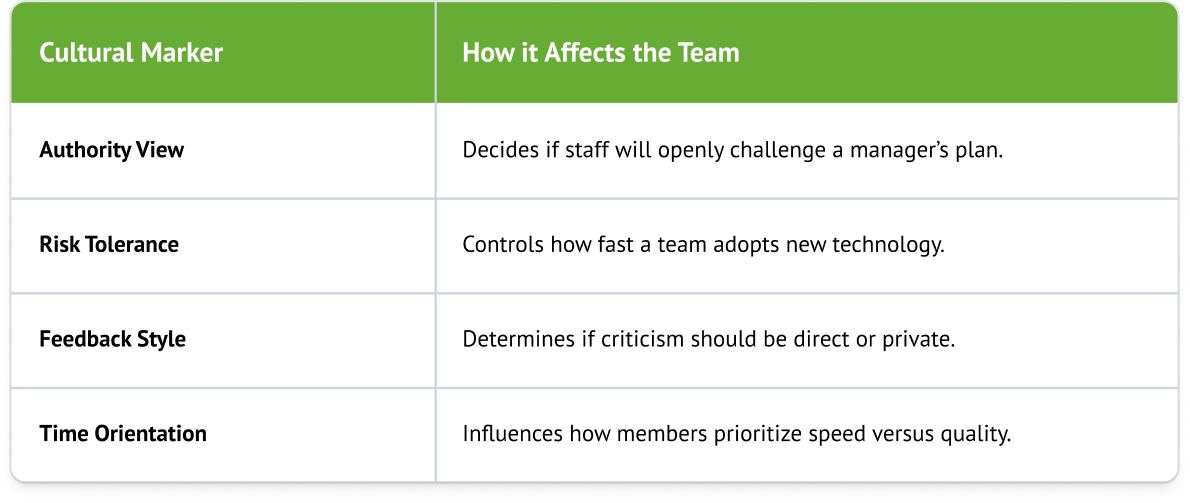
Most companies treat diversity as a general idea. However, top teams use data-driven tools like the Individual Cultural Blueprint Indicator (ICBI). This special tool is a cross-cultural test. It checks sixteen different markers. These include how a person sees authority, handles risk, or manages time.
The ICBI goes beyond simple personality tests. It looks at how your culture shapes your work style. Think about a staff member who stays quiet during a brainstorm. They do this to keep the group harmonious. A manager might wrongly think that this person has no ideas. This can happen without the right information.
The ICBI prevents these errors. It plots each employee's traits onto a visual and cultural map. This map turns hidden behaviors into clear facts. It works like a technical guide. It shows exactly where different work styles might clash before each project starts.
These four cultural markers define how your team communicates and makes decisions every day.
Lowering Communication Energy Costs
When employees feel they must constantly adjust their natural behaviors to fit in, they experience higher communication and energy costs.
This mental burden leads to burnout and affects focus. Think of it as a background process running on your computer, consuming valuable resources. Effective workplace diversity initiatives build psychological safety. This allows employees to be their authentic selves without fear of judgment.
So, when you reduce this constant mental strain, productivity naturally increases. Employees can devote their full cognitive resources to tasks rather than to social navigation.
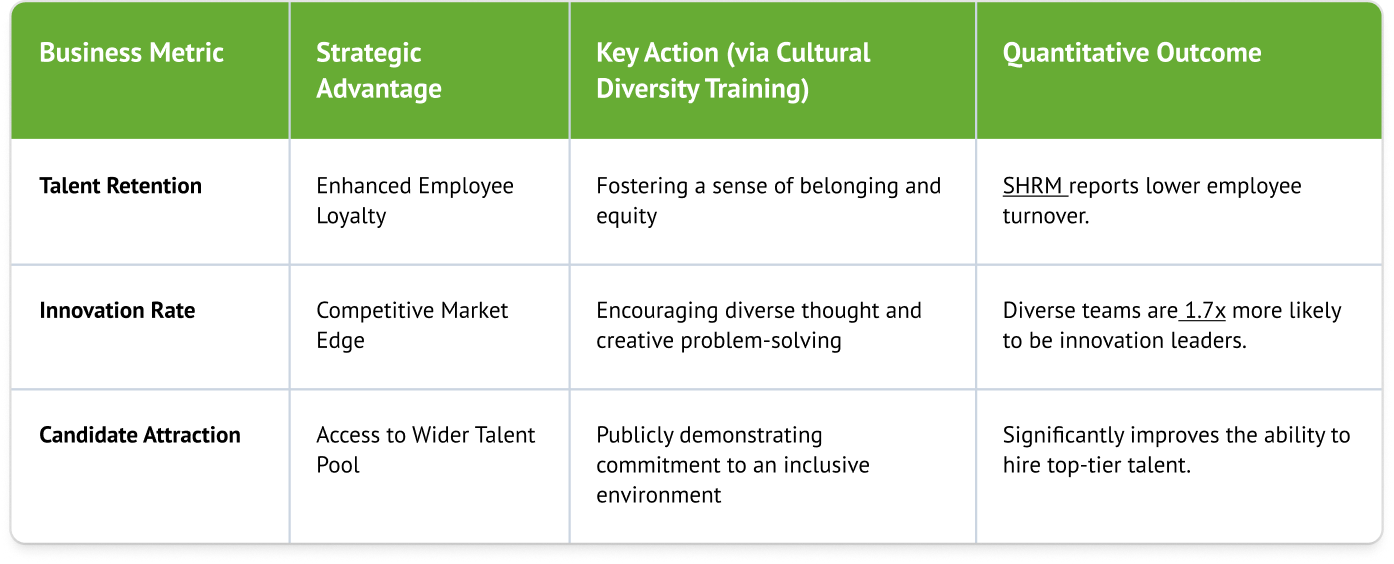
Gartner reports that highly inclusive teams can improve performance by up to 12%. Here are some technical solutions to lower these costs:
- Standardized Communication Protocols: Implement clear rules for meetings (e.g., using "raise hand" features, ensuring everyone gets speaking time).
- Active Listening Training: Teach specific techniques for paraphrasing and clarifying questions to reduce misunderstandings.
- Cross-Cultural Mentorship Programs: Pair employees from different backgrounds to foster understanding in a low-stakes environment.
- Bias-Aware Feedback Systems: Train managers to provide objective, culturally neutral feedback.
Implementing Real Change with Behavioral Audits
Simply talking about diversity is not enough. Many leading firms use behavioral audits to monitor inclusion in their daily operations.
These audits collect data on who speaks in meetings, who receives credit for ideas, and who is chosen for promotions.
This data helps uncover "affinity bias," where people unconsciously favor those most like themselves. Multicultural awareness training ensures that opportunities are distributed fairly and based on merit.
A survey by Glassdoor shows that 76% of job seekers consider a diverse workforce a top priority. So, if your internal audits reveal a lack of true inclusion, you will struggle to attract and keep top talent.
Using audit results as a basis for training helps fix these patterns. Managers learn how to lead more objectively through this program.
Bridging the Style and Context Gap
Communication extends far beyond mere language. It deeply involves both "high-context" and "low-context" communication styles. High-context cultures often rely on subtle cues, unspoken understanding, and shared background knowledge.
In contrast, low-context cultures prefer direct, explicit messages and clear statements. This fundamental mismatch often leads to significant misinterpretations.
For example, a polite "maybe" in one cultural setting could signal a firm "no" in another. Such discrepancies highlight the essential role of cultural diversity training. This specialized training provides a shared set of interpretations for these varied communication styles, ensuring messages are understood as intended.
These specific communication skills dismantle invisible barriers among your employees. A workspace emerges where diverse backgrounds lead to stronger solutions, preventing arguments. This approach builds a resilient team capable of navigating any global challenge effectively.
Is your team reaching its full potential? Our experts can help you build a custom strategy to bridge cultural gaps and drive performance.
Contact us today to begin your journey toward Inclusion Training for Employees and a more profitable, high-performing workplace.