.png)
Most organizations launch diversity and inclusion training with the best intentions and still wonder why nothing really changes. Employees sit through a session, fill out a feedback form, and return to the same workplace dynamics they left. The training checks a box. The culture stays the same.
That gap exists because most inclusion training is designed as a one-time event rather than a sustained experience. Effective diversity training is not about a single workshop. It is about building the skills, habits, and shared language that make inclusion part of how people work every day.
This guide walks you through exactly how to design inclusion trainings that actually stick, from needs assessment to measuring long-term impact.
Key Takeaways
- Assess your starting point: Survey employees and review demographic data before you build anything. This shows you where your workplace culture actually stands today.
- Set specific targets: Decide what behaviors or outcomes you want to shift, like interview practices, promotion rates, or belonging scores.
- Blend data with employee voices: Use HR metrics for the hard numbers and pulse surveys to understand how employees feel day to day.
- Connect training to your systems: Link your inclusion training records to performance and retention data. This helps you track whether the program is actually keeping people at the company.
- Track the return: Compare what you invest in your diversity training program to what you save through reduced turnover and stronger employee engagement.
- Plan for the long term: Use what you learn from each training cycle to spot future gaps in your DEI efforts and adjust your strategy before small issues become bigger ones.
Step 1: Start With a Real Needs Assessment
Before you design anything, find out what your organization actually needs. This sounds obvious, but many DEI programs skip it entirely and build generic content that does not reflect real workplace dynamics.
Survey employees. Run focus groups. Look at your demographic data, promotion rates, exit interview themes, and any internal complaints or conflict patterns. Talk to people across levels and functions, not just senior leaders.
A strong needs assessment tells you where the gaps are, which groups feel least included, and what specific behaviors or systems are driving those gaps. That information shapes everything that follows.
Creating an inclusive workplace starts with understanding the specific barriers your employees are facing, not the ones a generic training template assumes they have.
Step 2: Define Clear, Measurable Outcomes
What does success look like six months after the training ends? If you cannot answer that question before you build the program, you are not ready to build it.
Good inclusion training outcomes are behavioral and observable. Here are examples of the difference:
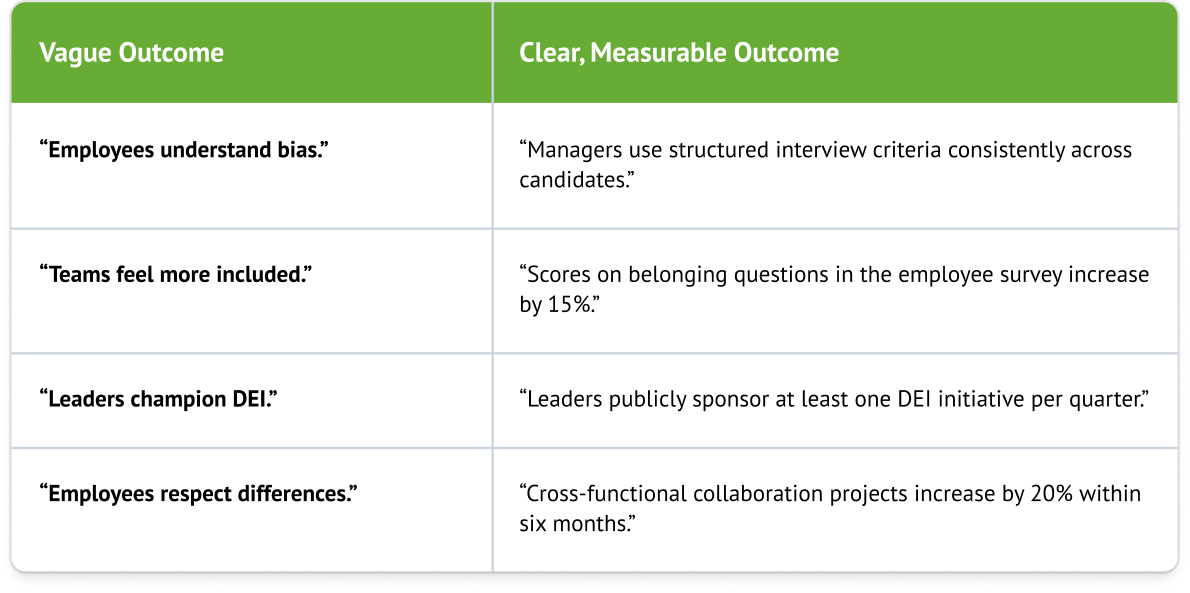
Tie your outcomes to the broader DEI initiatives your organization is already running. Training should reinforce and accelerate those efforts, not exist in a silo alongside them.
Step 3: Build Content Around Cultural Competence, Not Just Awareness
Awareness training teaches people that bias exists. Cultural competence training teaches people how to address it. There is a big difference, and most programs stop at awareness.
Cultural competence is the ability to interact effectively with people from different backgrounds, cultures, identities, and experiences. It develops over time through practice, reflection, and feedback, not through a single presentation.
When building your content, focus on three layers:
- Knowledge: What employees need to understand about identity, privilege, systemic inequity, and workplace dynamics.
- Skills: How employees practice allyship, inclusive communication, conflict navigation, and equitable decision-making.
- Mindset: How employees develop the curiosity, humility, and openness to keep growing beyond the training itself.
Content that addresses all three layers produces employees who know what inclusion means and can actually practice it day to day.
Step 4: Choose the Right Format for a Diverse Workforce
Not everyone learns the same way, and not every topic fits the same format. Effective diversity training uses a blended approach that aligns content with method.
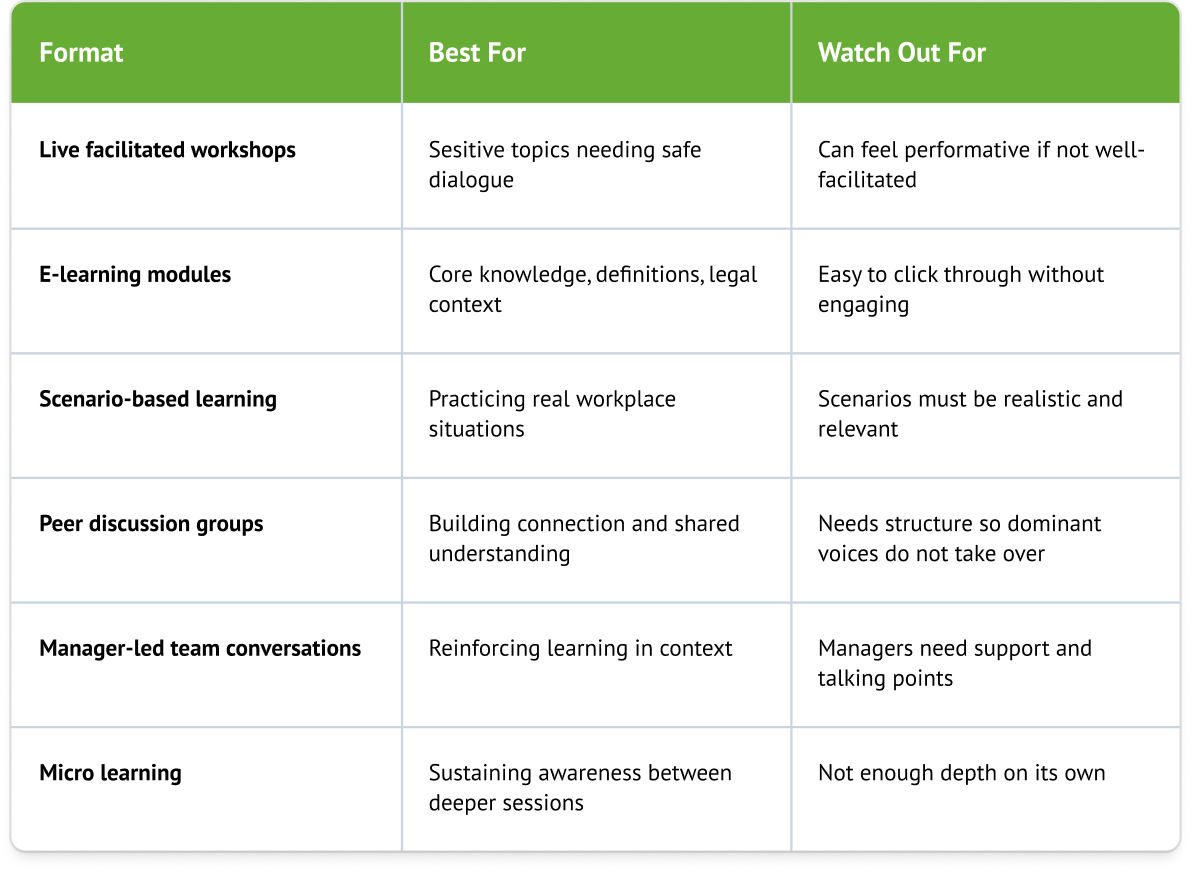
A blended approach also helps reach a diverse workforce across different roles, schedules, and learning preferences. Remote employees, frontline workers, and corporate staff often need different delivery methods even when the core content is the same.
Step 5: Foster Inclusivity by Making the Learning Environment Safe
Employees will not engage honestly with inclusion training if they feel like one wrong word will define them. Psychological safety is not a soft add-on. It is the condition that makes everything else possible.
- Set shared agreements first: Before the content begins, the group decides how they will show up. What stays in the room? What does respectful pushback look like? This gives people a framework to return to when conversations get hard.
- Normalize discomfort: Inclusion topics ask people to examine long-held assumptions. That process is supposed to feel uncomfortable, and good facilitators say so upfront.
- Invest in your facilitators: No curriculum can carry a room that a facilitator cannot hold. The people leading these sessions need experience navigating tension, not just content knowledge.
When employees feel safe, they bring real experiences into the room. And that is where the actual learning happens.
Step 6: Connect Inclusion and Belonging to Everyday Company Culture
Inclusion and belonging do not happen in a training room. They happen in meetings, in hiring decisions, in how feedback gets delivered, in who gets sponsored for opportunities, and in a hundred small moments every day.
If your training does not connect to those moments, it will not change them. Here are practical ways to close that gap:
- Integrate language from the training into existing processes: Use the same frameworks for discussing feedback, running meetings, or evaluating candidates that you introduced in the training.
- Redesign systems that undermine what you are teaching: If your training says to reduce bias in hiring but your job postings use exclusionary language, the system sends a louder message than the training.
- Give managers the tools to lead inclusive teams: Managers shape day-to-day culture more than any training program does. Equip them with conversation guides, decision-making frameworks, and regular coaching.
- Celebrate inclusive behaviors visibly: Recognize employees who model inclusion in public ways. This tells everyone that these behaviors are valued, not just trained.
Step 7: Build a Long-Term Diversity Training Program, Not a One-Time Event
A single training session, however well-designed, does not build a diverse and inclusive workplace. Behavioral change requires repetition, reflection, and reinforcement over time.
Consider your diversity training program as a curriculum, not an event. Here is what a long-term learning journey might look like:
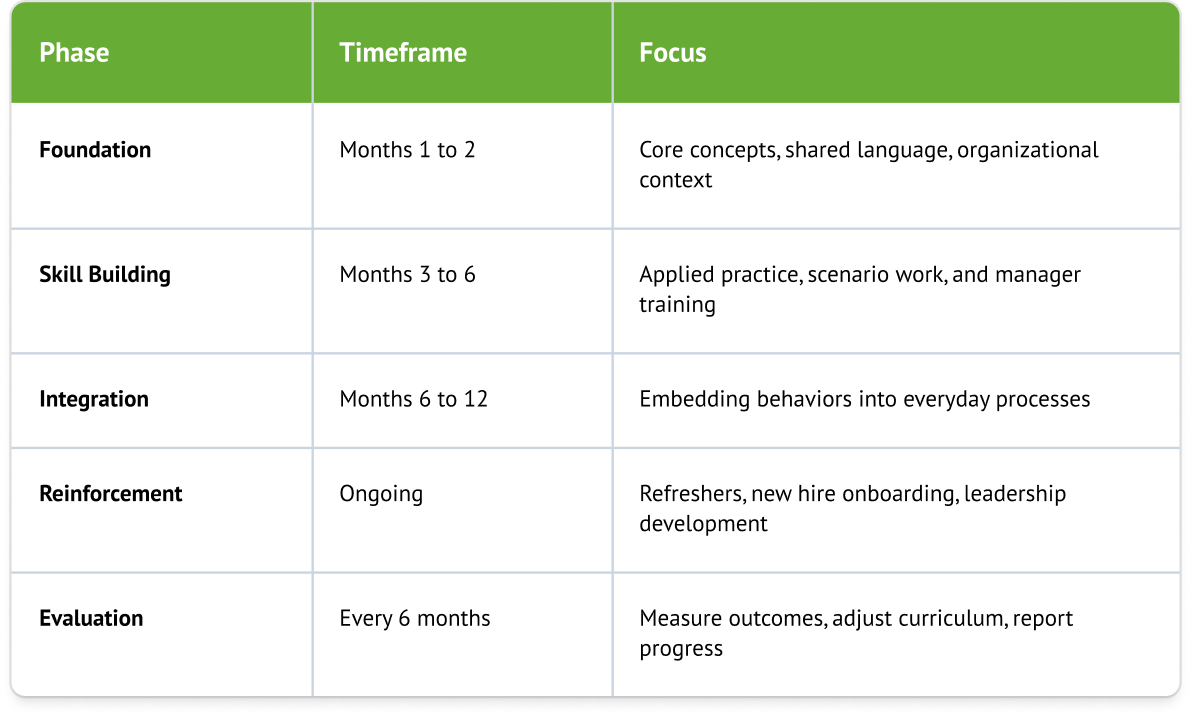
Sustained DEI efforts signal to employees that inclusion is a real organizational priority, not something that surfaces once a year when the calendar says so.
Step 8: Measure What Actually Matters for DEI Initiatives
Most inclusion training gets evaluated with a post-session survey asking whether employees liked the training. That tells you almost nothing about whether anything changed.
Measure at multiple levels:
- Reaction: Did participants find the content relevant and the delivery engaging?
- Learning: Can participants apply the concepts they encountered? Pre and post-knowledge assessments help here.
- Behavior: Are people doing anything differently? Manager observations, 360 reviews, and peer input can capture this over time.
- Results: Are your DEI initiatives moving the data? Track promotion rates, representation at different levels, pay equity, retention by demographic, and employee survey scores on belonging questions.
Reporting these results transparently, including where you are not making progress, builds trust and keeps the work honest.
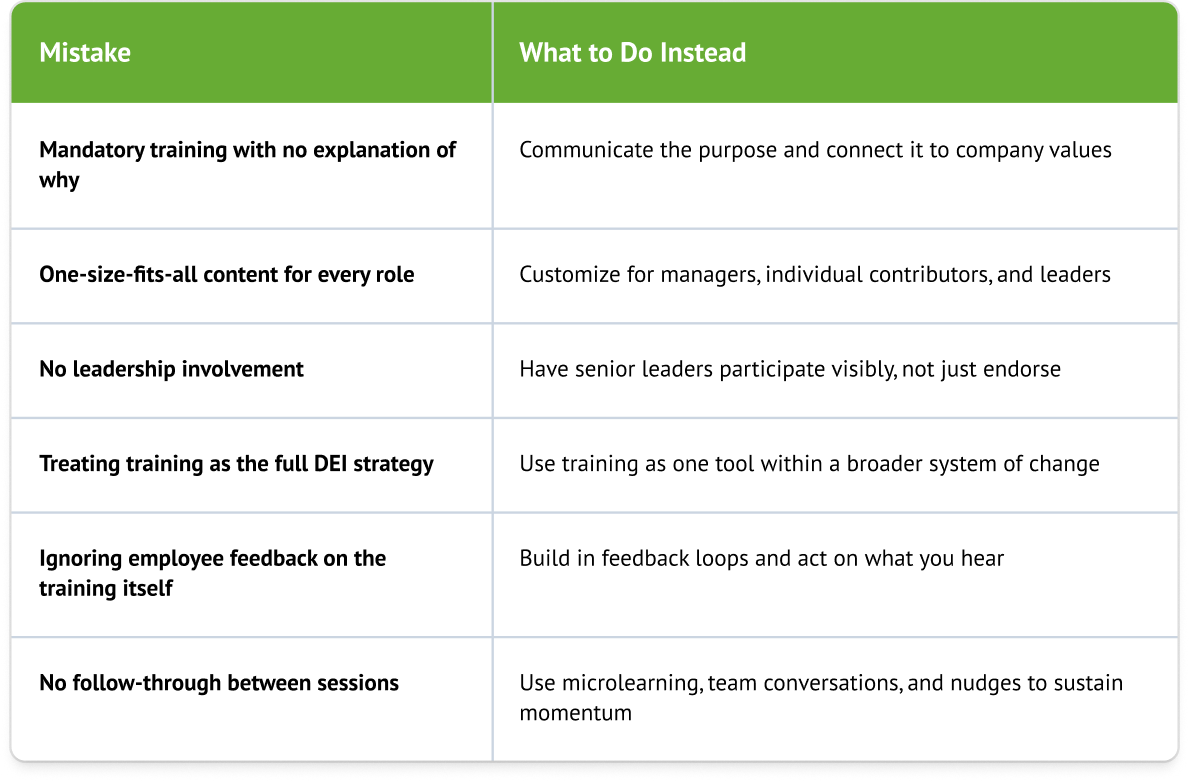
Common Mistakes That Undermine Diversity, Equity, and Inclusion DEI Work
Even well-resourced organizations make these mistakes. Knowing them in advance saves significant time and credibility.
What Effective Diversity Training Actually Feels Like
When inclusion training works, people connect emotionally and recognize their own experiences. The impact of certain behaviors on colleagues becomes clearer, along with practical tools that can be applied immediately.
A sense of belonging grows when people see that their organization is serious, not performative. When employees feel that the training connects to real systems, real conversations, and real accountability, trust follows. That trust is what makes fostering an inclusive work environment possible over the long term, and it starts with taking the design of your training seriously.
Ready to Build Inclusion Training That Actually Works?
Designing effective inclusion trainings for employees takes expertise, intentionality, and an understanding of how adults learn and how organizations change. If you are ready to move beyond checkbox training and build something that drives real cultural competence and lasting employee engagement, the team at CT3 Training can help.
Visit ct3training.com to explore their programs and start building a workplace where everyone can do their best work.