.png)
Did you know that a Deloitte study found that inclusive teams outperform their peers by 80% when it comes to team-based assessments?
This massive performance gap proves that fostering a sense of belonging is more of a competitive advantage than just a social goal.
While most leaders recognize this value, they often lack the tools to verify if their current strategies are effective.
In this blog, we provide the framework you need to move beyond simple attendance records. You will learn how to measure the success of inclusion training programs by focusing on key performance indicators that reflect meaningful results. Using a data-driven approach ensures your investment creates a more inclusive workplace for everyone.
Key Takeaways
- Establish a baseline: Gather information about your team before starting training to see where your workplace culture stands today.
- Set clear targets: Decide exactly what you want to change, such as hiring habits or promotion rates.
- Mix numbers with opinions: Use hiring data to see the facts and surveys to understand how employees feel.
- Connect your software: Link training records to your human resource systems to track who stays at the company.
- Analyze the costs: Compare your training spend to the money saved from reduced turnover.
- Look forward: Use predictive tools to identify future risks and gaps in your diversity, equity, and inclusion (DEI) strategy.
The Importance of Evaluating Inclusive Training Programs
Many organizations launch initiatives without knowing their starting point. To see progress, you must first understand your current culture. You should collect data on employee demographics, career movement, and overall sentiment. This baseline allows you to see actual growth over time.
A strong evaluation helps the human resources department justify the budget for future inclusion programs.
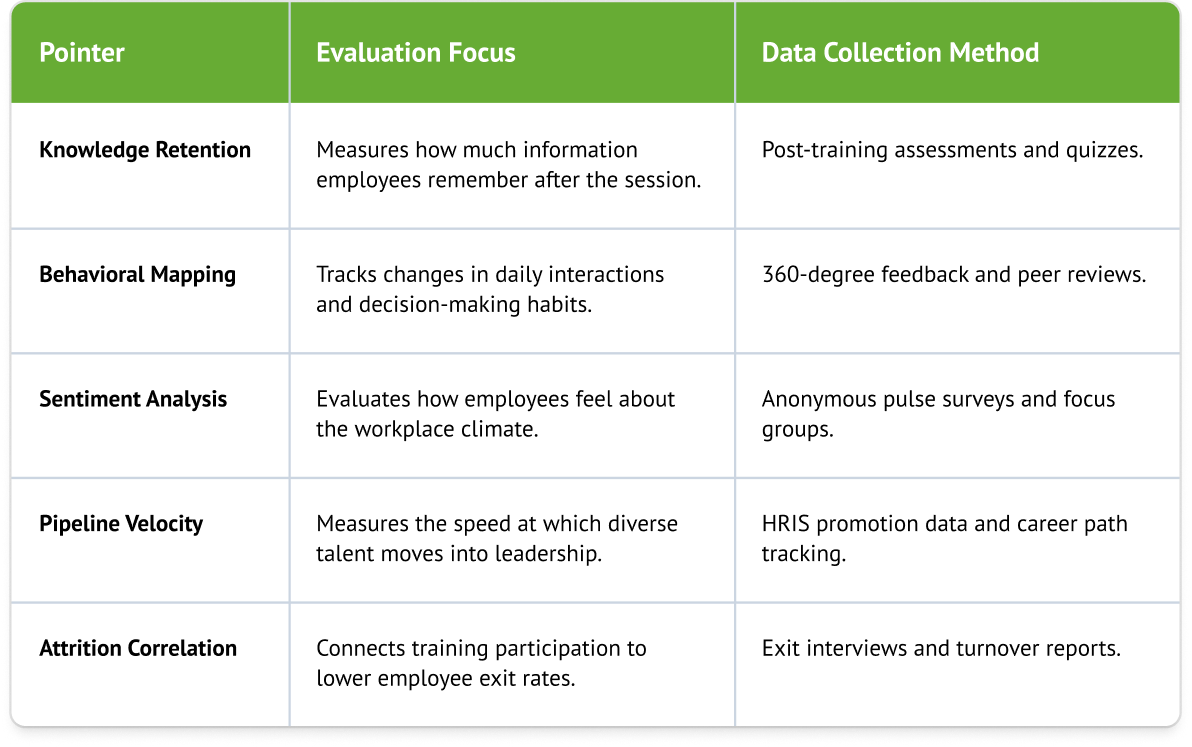
Without these metrics, it is difficult to prove that the training actually creates an equal opportunity environment. The following table highlights the technical components required for a successful evaluation.
Components of Program Evaluation
Define Your Goals Early
You must decide what success looks like before training begins. Clear goals help you choose the right metrics to track. For example, are you trying to reduce grievances? Do you want to increase diversity within your leadership pipeline? Objectives should focus on the long-term health of the company.
Without specific objectives, your data will lack direction. If your goal is to improve middle management, your metrics should focus on turnover rates within those specific teams.
According to Emtrain research, companies with inclusive cultures see 22% lower turnover. Tracking your internal numbers against this benchmark can help you determine if your training programs meet industry standards.
Setting Specific Objectives
- Targeted Recruitment: Aim for a specific increase in diverse candidate pass-through rates to ensure equal opportunity.
- Improving Retention: Focus on reducing the "leaky pipeline" that leads marginalized talent to exit early.
- Reducing Unconscious Bias: Monitor the number of formal complaints or legal issues related to unconscious bias in the workplace.
- Leadership Diversity: Track the promotion rates of underrepresented groups into senior management roles.
The Data Methods for Validation
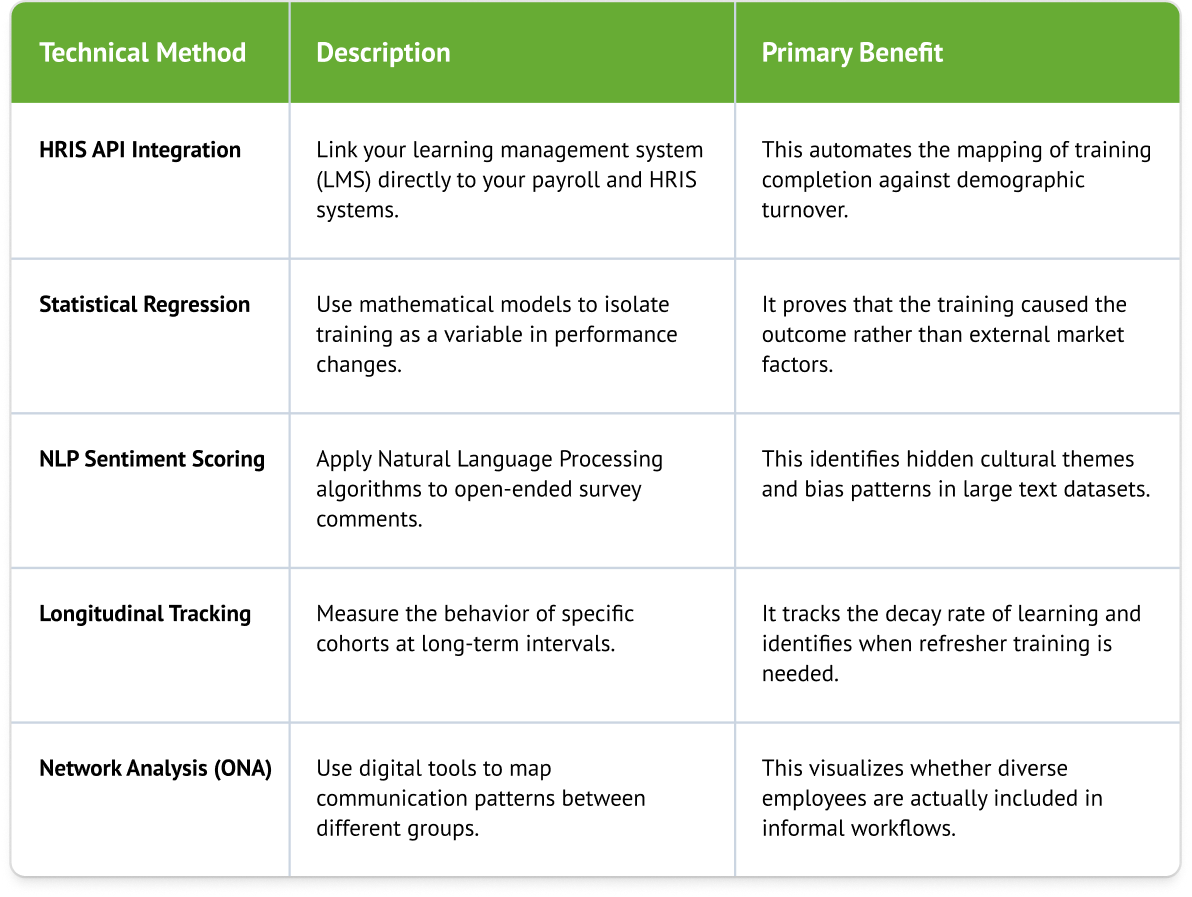
To ensure the accuracy of your results, you must use precise data collection methods. These technical steps help you isolate the specific impact of your efforts from other workplace variables. Additionally, you move from guessing to knowing by using advanced analytics.
This data-driven mindset is essential for any modern inclusive workplace.
Data Methods for DEI Validation
Measuring Quantitative and Qualitative Success
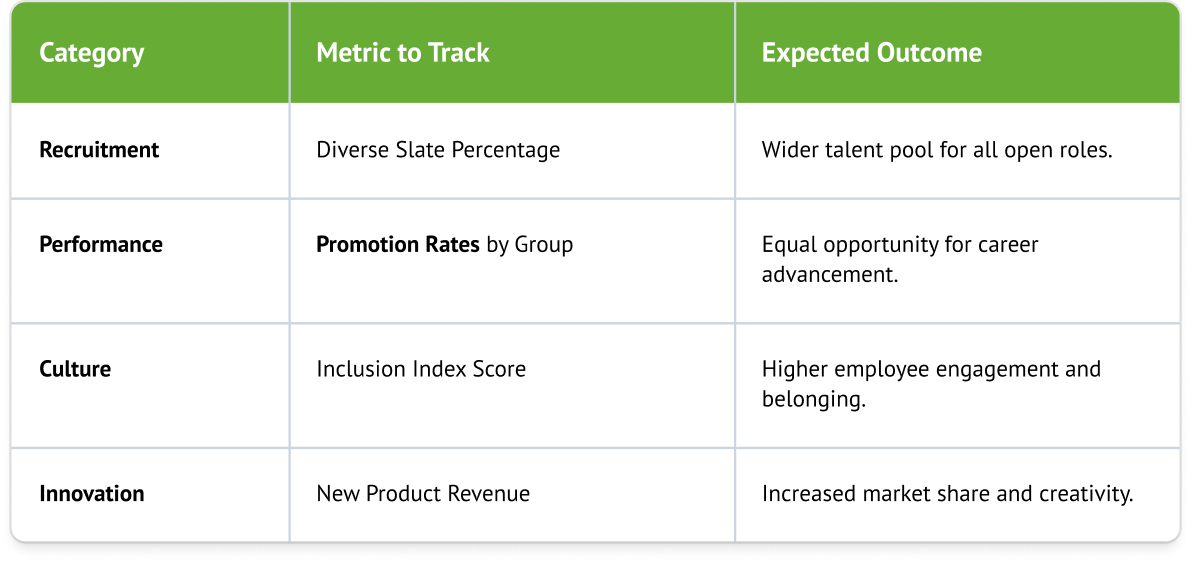
Successful diversity, equity, and inclusion efforts require both numbers and employee feedback. Quantitative data shows what is happening, while qualitative data explains why it is happening. Tracking these metrics helps you see how your workplace culture impacts team results.
For example, research by Gartner shows that inclusive teams improve their performance by up to 30 percent in high-diversity environments.
Key Metrics for Success
Tracking Behavioral Shifts
- Active Allyship: Monitor how often employees intervene during exclusionary moments.
- Psychological Safety: Ask if employees feel safe taking risks or sharing their ideas without fear.
- Meeting Equity: Observe if managers ensure each team member has a voice during discussions to limit unconscious bias.
Utilizing Predictive Analytics for Culture Forecasting
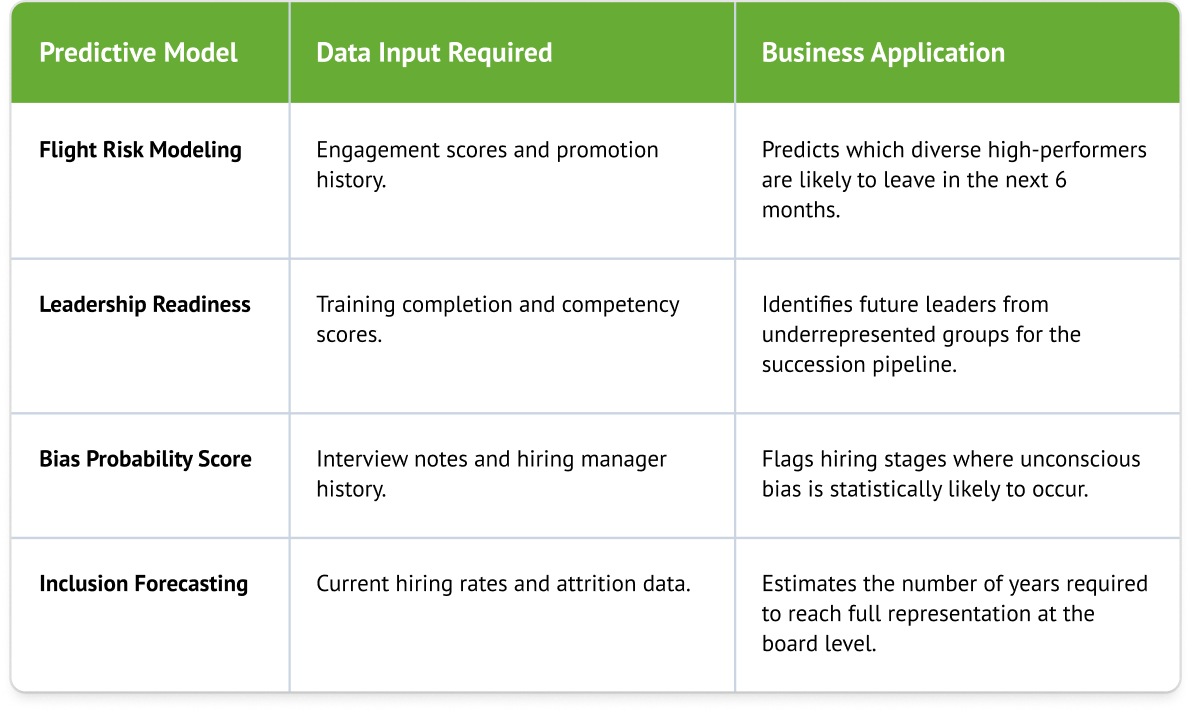
Instead of only looking at the past, modern organizations use predictive analytics to forecast future workforce trends. This technical approach helps you identify where potential issues might arise before they become permanent problems.
You can adjust your inclusion training programs by analyzing current data to address leadership or retention gaps.
Predictive Models for Inclusion Success
Advanced Data Points
- Correlation Coefficients: Calculate the relationship between training engagement and employee net promoter scores.
- Retention and Survivability: Predict how long an employee will stay after completing a program using predictive modeling.
- Bias Incident Rates: Assess how often formal and informal complaints occur over time.
Overcoming Common Measurement Pitfalls
Many companies fail to measure success because they fall into common traps. Recognizing these hurdles early will save you time and resources.
- Relying on Vanity Metrics: Tracking the number of attendees is not the same as tracking progress. Focus on behavior change instead of participation.
- Ignoring the Mid-Level Manager: Managers have the greatest impact on workplace culture. If you do not measure specific team data, you miss the root cause of turnover.
- Survey Fatigue: Asking too many questions can lead to low-quality data. Use short pulse surveys to keep engagement high and understand how employees feel.
- Lack of Transparency: If employees do not see the results of data collection, they will stop participating. Share your progress openly to build trust.
Case Studies: Real-World Application of Predictive Models
Let's see how big brands use data to ensure their training programs lead to real change.
Intel and Representation Forecasting
Intel is a leader in using data to drive inclusion. In 2015, they set a goal to reach full representation in their US workforce by 2020. They used predictive modeling to track hiring and attrition.
These data points allowed them to identify departments that were falling behind andadjust their inclusion training programs for specific teams. Intel reached its goal in 2018, two years earlier than expected.
Google and Psychological Safety
Google conducted a multi-year study called Project Aristotle. They wanted to understand why some teams performed better than others. Their data showed that psychological safety was the most significant factor.
Teams where everyone felt safe to speak up were more successful. Google now uses this data to measure the impact of management training and cultural initiatives.
Salesforce and Pay Equity Audits
Salesforce uses a technical approach to guarantee fairness. They perform regular audits to find pay gaps between employees. If they find a gap, they fix it immediately.
To date, they have spent over $22 million ensuring equal pay for equal work. This data-driven approach ensures that their inclusion efforts have a measurable financial impact and prevent future attrition.
Implementation Strategies for Success
Measuring success is an ongoing process that requires leadership and commitment. You must move away from the idea that one workshop can fix deep-rooted cultural issues. Instead, focus on continuous feedback loops.
Use the data you collect to tweak your training content every quarter. If the data shows that one department is struggling with retention, provide extra support for those managers.
Leaders are more likely to make changes when their bonuses are linked to these metrics. This ensures that the culture grows alongside the business.
- Establish quarterly feedback loops: Use brief pulse surveys to catch negative cultural shifts before they lead to turnover.
- Update content based on data: Refine your inclusion training programs every few months to address common bias patterns found in your hiring reports.
- Tie bonuses to DEI targets: Link executive and managerial compensation to diversity goals and team sentiment scores to drive real accountability.
- Deploy micro-learning sessions: Replace long annual workshops with short, frequent lessons that keep inclusive habits fresh in the minds of your staff.
- Provide targeted coaching: Offer specific support to managers in departments where data shows high attrition or low engagement scores.
- Maintain transparency: Share your progress reports with the entire organization to build trust and prove that your goals are more than just words.
Conclusion
Building a workplace where everyone feels a sense of belonging is a journey that never ends. To see real progress, you have to move away from counting how many people attend meetings. Instead, you should focus on the small, daily changes in how your team works together. Your efforts can be measured using both numbers and human feedback if you set a clear baseline.
This approach helps you fix problems early and keeps your culture healthy as your business grows.
If you are ready to move beyond basic data and make a real difference in your organization, CT3 can help. They provide the specific coaching and tools needed to turn inclusion training programs into a natural part of your daily operations.
CT3 focuses on building strong relationships and high expectations to help people reach their full potential.
You can improve your culture with these CT3 solutions:
- Real-Time Teacher Coaching: Get immediate, actionable feedback to improve how leaders and educators interact with their teams.
- No-Nonsense Nurturer Program: Learn how to build high-trust relationships while maintaining high standards of performance.
- Anti-Racism and Equity at Work: Access deep-dive training that helps your organization identify and remove systemic barriers.
- Professional Development: Participate in workshops that focus on long-term behavioral change rather than just one-time lectures.
Check out CT3 to find the right support for your team today. Developing a fair and supportive environment is the ideal way to ensure your organization succeeds for years to come.